
Highlights:
- The impact of substance misuse on forensic-correctional inpatients (F-CIP) is huge. This highlights that drug abuse has a significant negative impact on individuals in forensic-correctional mental health settings.
- Conventional methods of detecting substance misuse among F-CIP are limited. This suggests that existing methods for identifying drug use in this population have drawbacks.
- AACTS was successfully used as an ancillary tool for drug screening among F-CIP but more research is needed. This implies that AACTS shows potential for drug screening in this population, but further research is required to fully establish its effectiveness and reliability.
Key Points:
- Substance misuse is a major problem in forensic-correctional mental health settings. This emphasises the significance of the issue and the need for effective solutions.
- Urine drug screening has limitations. The abstract points out that urine tests may not always be feasible, and patients can manipulate the results by altering or substituting samples. This necessitates the use of additional tools to detect contraband substances.
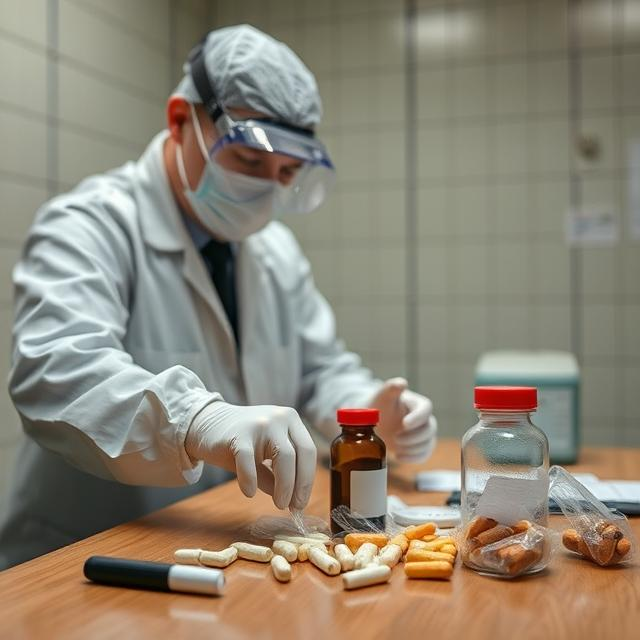
- AACTS was used to analyse environmental samples. The study utilised the AACTS gas chromatographic analyser to examine samples collected from the environment within forensic-correctional settings. This approach aimed to understand the potential benefits of such tools in similar contexts.
- Data collection and analysis: Over 18 months (January 2020 to June 2021), trained staff members collected 217 environmental samples. Analysis revealed that 66 samples (30%) tested positive for contraband substances. The most common substances detected were tetrahydrocannabinol (THC,25%), methamphetamines (19%), and and cocaine (16%). Other substances identified included MDMA, heroine, morphine, LSD, tramadol, and methyl-benzoate.
- Impact of COVID-19 restrictions: The abstract notes a decrease in positive samples during the period of COVID-19 restrictions within the forensic units. this suggests that the restrictions may have impacted substances use within the setting.
- AACTS as an ancillary tool: The study concludes that AACTS can serve as a valuable supplementary tool to detect and deter contraband substances within forensic-correctional settings. It also emphasises the importance of adequate training for staff to effectively utilise the tool.
Problem Analysis in Canada
- Forensic System Entry: In Canada, individuals with mental disorders who come into conflict with the law enter the forensic system under two primary circumstances:
- Unfit to Stand Trial: When a person is deemed mentally incapable of understanding the legal proceedings against them or participating in their defense.
- NCR-Md: When a person’s mental disorder is found to have prevented them from understanding the nature and consequences of their actions at the time of the offense.
- Substance Misuse in the Forensic System:
- Approximately 23.1% of Canadians in the forensic systems were found to have substance misuse issues at the time of their index offense.
- One-third of individuals with NCR-MD status also had a substance use disorder.
Study Rationale and Aim
- Context: Fentanyl Concerns: The acquisition of the AACTS analyser by the Forensic Psychiatric Program, St. Joseph’s Healthcare Hamilton, Ontario, was driven by heightened concerns regarding the presence of fentanyl in the community.
- Trafficking Concerns: There were specific worries that fentanyl or other illicit substances could be trafficked into hospital units housing forensic-correctional populations by individuals with community access.
- Detection Needs: This led to the need for a tool to detect potential psychoactive substances on patient’s property, environmental surfaces, or other materials within the hospital setting.
Results:
- Sample Collection: Over an 18-month period, 217 environmental samples were collected from different sources. These included powders, particles, liquids, or unidentified substances found in common areas, patient rooms, or items brought in from the community.
- Substance Detection: Three in every ten samples tested positive for contraband substances. The most commonly detected substances were cannabis, methamphetamines, and cocaine.
Discussion:
- Lesson Learned: The use of the gas chromatographic analyser technology provided valuable insights for forensic-correctional settings.
- Positive Test Rate: The high positive test rate highlights the prevalence of substance use within this population.
Conclusion:
- Prevalence of Substance Misuse: The findings reinforce the significant prevalence of substance misuse among forensic psychiatric patients, emphasizing its negative impact on clinical outcomes.
- AACTS as a Tool:While urine drug screening is widely used, the AACTS analyser has shown promise as an ancillary tool for detecting trace substances in secure forensic units.
- Need for Training and Further Research: Adequate training is essential for the successful implementation of the AACTS analyser. Additionally, further research is needed to fully evaluate its effectiveness and refine its use in forensic settings.
https://www.sciencedirect.com/science/article/abs/pii/S0379073824000732?via%3Dihub

Leave a Reply