
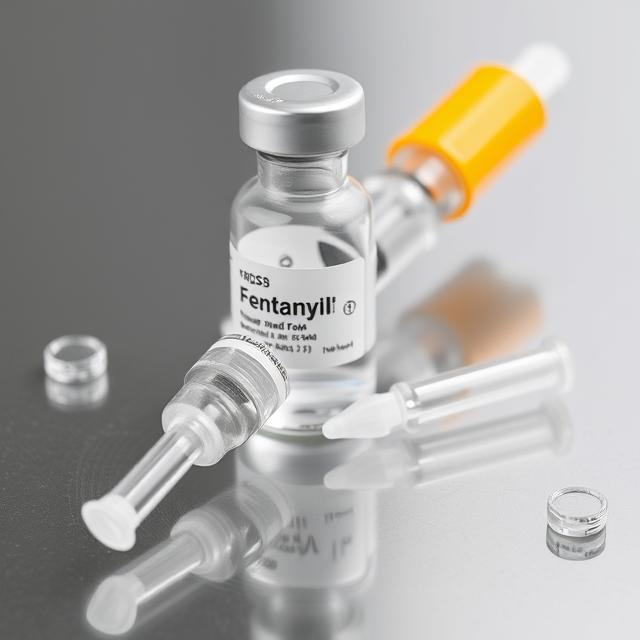
Fentanyl is a potent synthetic opioid that is similar to morphine but is 50 to 100 times more potent. It is a prescription drug that is also made and used illegally. While it has legitimate medical uses, primarily for severe pain management, the widespread illicit production and distribution of fentanyl have fueled a devastating public health crisis.
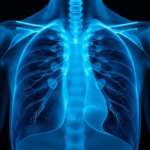
Effects on the Body:
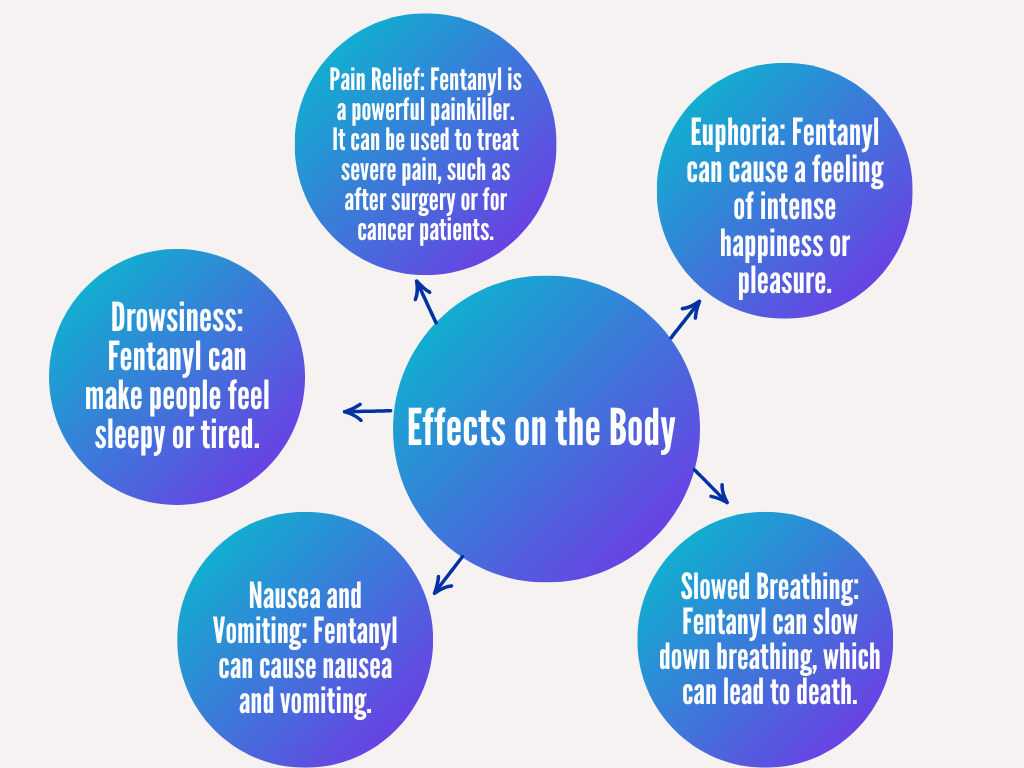
Effects on the Brain:
Fentanyl’s powerful effects stem from its interaction with the brain’s opioid receptors. These receptors are involved in the perception of pain, pleasure and emotions. When fentanyl binds to these receptors, it triggers a cascade of effects:
- Pain Relief: Fentanyl effectively blocks pain signals, providing providing powerful analgesia.
- Euphoria: The drug floods the brain with dopamine, a neurotransmitter associated with pleasure and reward, leading to an intense feeling of euphoria.
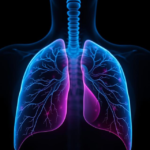
- Respiratory Depression: A particularly dangerous effect is the slowing down of breathing. Opioids like fentanyl depress the brainstem’s respiratory centres, which control breathing. This can lead to a potentially fatal lack of oxygen.
Overdose: A Grave Danger
Due to its extreme potency, it is alarmingly easy to overdose on fentanyl. Even a tiny amount, equivalent to a few grains of salt, can be lethal. Overdose occurs when the drug overwhelms the brain’s respiratory centres, causing breathing to slow or stop altogether. This can lead to hypoxia (lack of oxygen), which can result in coma, permanent brain damage, and death.
Treatment of Overdose:
The primary treatment for fentanyl overdose is the administration of naloxone. Naloxone is an opioid antagonist that rapidly reverses the effects of opioids by blocking their binding to receptors. It can restore breathing within minutes, making it a crucial tool in combating opioid overdoses. Naloxone is available in various forms, including injectable and nasal spray formulations, making it accessible to first responders and even the general public.
Addiction: A Vicious Cycle
Fentanyl is highly addictive. Regular use can lead to tolerance, meaning that the user needs increasingly higher doses to achieve the same effect. This can quickly escalate to dependence, where the body relies on the drug to function normally. When someone dependent on fentanyl stops using it, they experience withdrawal symptoms, which can include anxiety, insomnia, muscle aches, nausea, vomiting and diarrhea. These symptoms can be extremely uncomfortable, making it difficult for individuals to quit without medical assistance.
Treatment of Addiction
Fentanyl addiction is a complex condition that often requires a multi-faceted approach to treatment. Some effective interventions include:
- Medication-Assisted Treatment (MAT): MAT involves the use of medications like methadone or buprenorphine, which help to manage withdrawal symptoms and cravings. These medications allow individuals to function normally while reducing the risk of relapse.
- Behavioural Therapy: Counselling and therapy can help individuals identify triggers for drug use, develop coping mechanisms, and address underlying issues that may contribute to addiction.
- Support Groups: Peer support groups, such as Narcotics Anonymous, provide a safe and supportive environment for individuals to share their experiences and connect with others in recovery.
Problems
The problems associated with fentanyl extend beyond individual health risks. The widespread availability of illicit fentanyl has contributed to a surge in in overdose deaths, straining healthcare systems and devastating communities. The illegal production and distribution of fentanyl also fuel criminal activity and contribute to social instability. Fentanyl is a dangerous and highly addictive drug that poses a significant threat to public health. Understanding its effect on the brain, the risks of overdose and addiction, and the available treatment options is crucial in addressing this crisis.
Solution: Advance Active Chemical Threat Scanning System (AACTS)
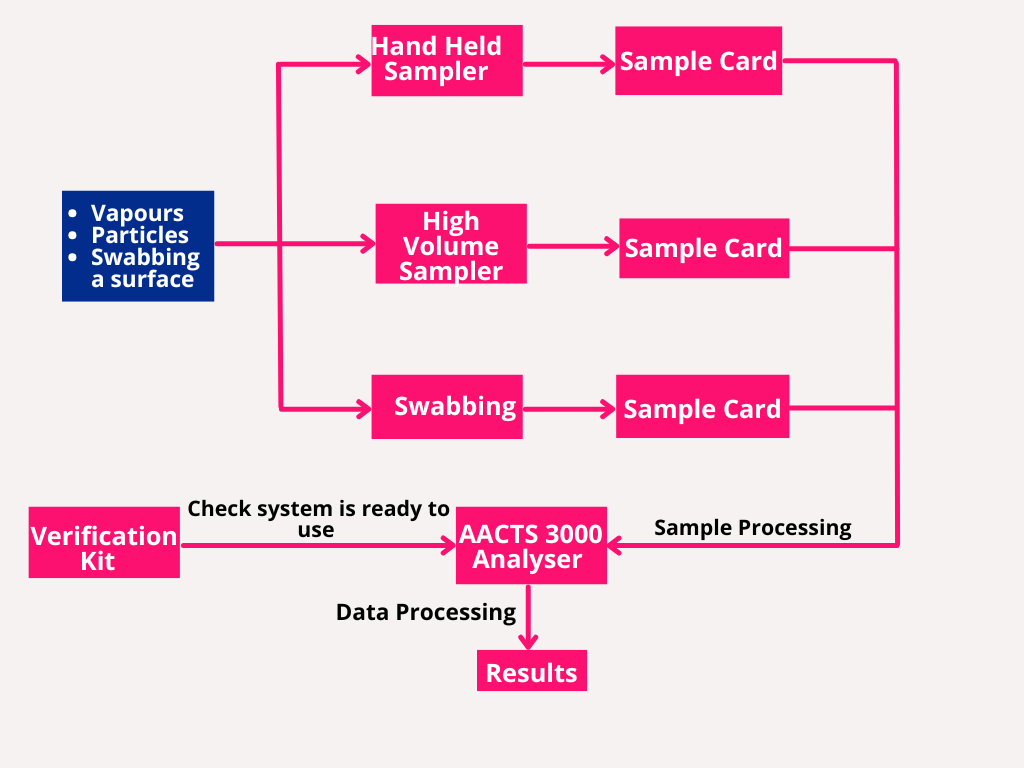
The Advance Active Chemical Threat Scanning System (AACTS) utilises the cutting-edge AACTS Analyser, which excels at detecting fentanyl with remarkable precision without even having to touch it. Samples can be collected using an innovative air sampling technique; the collected samples are then analysed by placing a sample card into the analyser. This card is heated to release trapped molecules, followed by a sophisticated analysis using gas chromatography and ion mobility spectrometry to identify the presence of fentanyl. To further enhance accuracy, advanced signal processing techniques are employed, ensuring reliable results. The AACTS analyser is powered by an embedded PC and features a user-friendly interface built on an industry-standard operating system. Results can be visualised in two or three dimensional formats or displayed as bar graphs, all made accessible through an intuitive graphical user interface. For convenience, results can be stored locally on the analyser or easily exported via various networking options. The AACTS stands at the forefront of target substance identification, providing a robust and practical approach to the detection and identification of threats through innovative aspiration technology.
Equipment Profile
AACTS 3000 Analyser:
- It works on Ion Mobility Spectrometry (IMS).
- Its sensitivity levels varies from low nanogram to picogram levels.
- It gives result in 20 seconds.
- It will be ready in 20 – 25 minutes.
- Weight: 37.5 lbs (approx. 17 kg).
- Dimension: 40cm (L) x 39cm (W) x 34cm (H).
Aspiration Card (sample card):
- Sample acquisition equipment.
- Made up of fine wire-mesh through SPME.
- Wire-mesh is molded to a heat-resistant handle.
- Can easily adsorb the molecules of provided sample.
Hand Held Sampler:
- Easy to use, rapid and reliable method of acquiring air samples using aspiration card.
- Power: 18V Lithium ion battery.
- Sampling time: user controlled, 10 sec-2 min typical.
- Sampling flow: 150L/min (aspiration card).
- Dimension: 19.9cm (L) x 11.3cm (W) x 22.1cm (H).
- Operating Temperature: -20 degree celsius to +40 degree celsius, RH>90% (non-condensing).
- Can be powered either by battery or external power connection to a robot.
- Air samples can be taken from an object, vehicle, package/pallet or person.
High Volume Sampler:
- The Aspiration sampling system allows to collect air sample from various sea, air or other containers, vehicles, areas/enclosure, skids, packages or hard to reach surfaces.
- Electrical: 220V AC, 10A (max), 50HZ.
- Sampling Time: 1-10 minutes.
- Dimensions: 30.5 x 36 x 26cm.
- Connecting Hose Dimensions: 3.17cm I.D x 4.5m long.
- Sampling Hood: 39cm (L) x 28cm (W) x 15cm (H).
- Operating Temperature: 0 degree Celsius 40 degree celsius, RH<95% (non-condensing).
Aspiration Card Cleaner:
- Can clean up to 5 filter cards at the same time.
- Temperature and time controlled.
- LEDs to indicate temperature and operation.
- Cleaning time: 5 min.
- Weight: 6.5 lbs. (2.95kg).
- Dimensions: 27.5cm (L) x 25.5cm (W) x 12.5cm(H).
Accessories/Probes:
- Magnetic Latch.
- Sample Probes.
- Sample Card Holder.
Sampling And Analysis
Leave a Reply