

Introduction:
Breath analysis has emerged as a non-invasive diagnostic tool, offering valuable insights into human health. One of the key components of exhaled breath is Volatile Organic Compounds (VOCs) small gaseous molecules that originate from metabolic processes within the body or from external environmental exposures. By analysing VOC profiles, researchers and clinicians can detect diseases, monitor metabolic conditions, and even assess environmental toxin exposure.
What Are Breath VOCs ?
Volatile Organic Compounds are carbon-based molecules that evaporates easily at room temperature. In human breath, VOCs can originate from:
- Endogenous sources: Metabolic processes, oxidative stress and microbiome activity within the body.
- Exogenous sources: Inhalation or ingestion of chemicals from diet, pollution, smoking or occupational exposure.
More than 800 different VOCs have been identified in human breath, with variations depending on age, health, lifestyle and environment.
Mechanism of VOC Production
Breath VOCs are primarily produced in the body through:
- Lipid peroxidation: Oxidative stress leads to the breakdown of cell membranes, releasing compounds like ethane and pentane.
- Microbial metabolism: The gut and lung microbiome contribute to VOCs like hydrogen sulphide and methanethiol.
- Metabolic pathways: Processes like amino acid metabolism generate compounds like acetone (from fat metabolism) and ammonia (from protein breakdown).
These VOCs travel through the bloodstream and are expelled through the lungs.
Applications in Medical Diagnostics
- Disease Detection
Breath VOCs serve as potential biomarkers for various diseases, including:
Lung Cancer: Elevated levels of hydrocarbons and aldehydes.
Diabetes: Increased acetone due to altered fat metabolism.
Asthma and COPD: Increased nitric oxide and specific hydrocarbons linked to airway inflammation.
Liver Disease: Elevated dimethyl sulphide and ammonia, reflecting impaired detoxification.
Gastrointestinal Disorders: VOCs related to gut microbiome imbalances, such as hydrogen sulphide in irritable bowel syndrome (IBS).
2. Infection Detection
Pathogens release distinct VOCs that can be detected in breath. For example. tuberculosis bacteria produce methyl nicotinate, while respiratory infections after breath profiles due to inflammation and microbial activity.
3. Metabolic Monitoring
Breath acetone levels provide insights into ketosis, useful for diabetes management and weight loss tracking. Ammonia levels in breath can indicate kidney dysfunction.
4. Environmental and Occupational Exposure
Workers exposed to solvents, heavy metals, or air pollutants often exhale specific VOCs that can be monitored for occupational health assessments.
Breath Analysis Technologies
Several advanced techniques are used to analyse breath VOCs:
- Gas Chromatography-Mass Spectrometry (GC-MS): Gold standard for identifying and quantifying VOCs with high accuracy.
- Electronic Noses (E-Noses): Sensor arrays mimicking the human olfactory system for pattern recognition of VOC mixtures.
- Ion Mobility Spectrometry (IMS): Rapid detection of specific compounds based on their mobility in an electric field.
- Laser-based Spectroscopy: Non-invasive, real-time monitoring of specific gases like ammonia or nitric oxide.
Challenges and Future Directions:
Despite the promise of breath VOC analysis, several challenges remain:
- Standardization: Variability in VOC levels due to diet, environment and instrument differences.
- Data Interpretation: Complex mixtures of VOCs require advanced algorithms and artificial intelligence for accurate diagnosis.
- Clinical Validation: Large-scale studies are needed to establish reliable disease-specific VOC biomarkers.
Future research aims to integrate breath analysis into point-of-care diagnostics, leveraging AI and machine learning to enhance accuracy and speed.
The Advance Active Chemical Threat Scanning System (AACTS) Breathalyser detects volatile organic compounds (VOCs) in exhaled breath using Ion Mobility Spectrometry (IMS), a highly sensitive technique for identifying trace chemicals. The detection process follows these key steps:
Method of Detecting Breath VOCs
- Breath Collection: The individual exhales 7-8 consecutive breaths onto a nanocarbon-treated sample card.
- Sample Processing: The sample card is inserted into a heated desorber module, where VOCs are thermally vaporised.
- VOCs Detection via IMS: The ionised molecules are analysed using Ion Mobility Spectrometry (IMS), which measures their mobility in an electric field.
- Pattern Recognition & Database Matching: The Spectral data is compared against a pre-programmed VOC database to identify chemical signatures linked to specific threats or diseases.
- Results & Analysis: The entire process is completed within 20 seconds, with immediate on-screen results and a low detection limit at the nanogram level.
Advanced Features:
- Dual Polarity IMS Mode: Enhances detection accuracy by identifying both positive and negative ion species in VOCs.
- Baseline Correction & Noise Filtering: Reduces false positives and improves data reliability.
- Rapid Calibration & High Sensitivity: Can detect VOCs associated with lung cancer, tuberculosis (TB), and illicit substances.
Applications:
Medical Diagnostics: Used for early lung cancer and tuberculosis detection by identifying disease-related VOCs in breath samples.
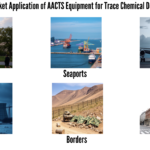
Security & Law Enforcement: Detects illicit substances, narcotics and chemical threats in forensic and security settings.
The AACTS breathalyser is a fast, non-invasive and highly sensitive tool for detecting VOCs in breath, making it valuable for medical diagnostics and security applications.
Conclusion
The AACTS breathalyser represents a breakthrough in both chemical threat detection and medical diagnostics, offering a fast, accurate and non-invasive alternative to conventional methods. Its high sensitivity, rapid response time, and broad application potential make it an essential tool for security agencies, forensic experts and healthcare professionals.

Leave a Reply