

This article was published in Government Technology & Services Coalition’s (GTSC) Homeland Security website on January 4, 2019, explores the use of natural acids to detect human trafficking. The headline is:
PERSPECTIVE: Use Natural Acids on Humans to Detect Trafficking, Smuggling Victims in Cargo.
The article is about using natural acids to detect human trafficking. It suggests using natural acids to identify smuggling victims in cargo. It refers to customs and immigration related to human trafficking. The article is written by Sabatino Nacson.
Human Trafficking and Smuggling
Problem: Human trafficking and smuggling are a growing problem, particularly in the U.S. and Europe.
Impact: Smugglers offer a variety of services to facilitate illegal migration, including transportation, accommodation, and fraudulent documents. This puts the health and lives of trafficked or smuggled individuals at risk.
Methods: Human trafficking and smuggling can happen through various methods, including:
- By boat
- By air cargo
- By marine containers
- By trucks and cars at border crossings
Security Risks: Human smuggling undermines national security by making it difficult to vet those entering a country.
Challenge: Large-scale arrivals make it difficult to determine if individuals are involved in criminal activity or pose a threat to national security.
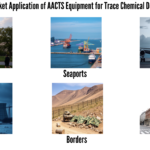
Hidden Individuals: People are often concealed within containers, making detection difficult, particularly at seaports where resources are limited.
Collaborators: Smugglers often work with collaborators on the inside, facilitating the release of smuggled individuals into the country.
New Detection Method:
Collaborations: The University of Waterloo and Advance Active chemical Threat Scanning Systems (AACTS) have developed a new detection method.
Detection Technique: This method uses specific organic acids emitted by humans.
Sampling: Air samples are taken from within enclosed on a nano-carbon-coated sample card.
Analysis: The sample is immediately analysed for lactic and pyretic acids, providing results within 1-2 minutes.
Purpose: The method provides a way to quickly identify potential hidden individuals in sealed environments.
Approach Validation:
The study used a GC-IMS model AACTS-3000 to analyse target skin emission compounds. The instrument relies on the comparison of retention and drift times of ion mobility peaks to identify the compounds.
The retention and drift times are compared to those of standard mixtures.
Sample acquisition used a battery-operated, handheld sampler loaded with a vapor enrichment card.
The study used a glass chamber to expose people’s hand and analyse the emission rate of specific acids.
Identified Acids:
The study focused on identifying two metabolic organic acids: lactic acid and pyruvic acid. These acids are ionised and detected in the negative ion modes of the instrument. They form specific negative ion peaks with respective masses of 87 and 89. Identification of these acids is based on their specific reduced mobility contrasts, which are programmed in the instrument.
Additional Dimension:
The front GC separation provides an additional dimension for characterising these acids. This dimension is especially important for analysing complex chemical matrices, such as those found in air cargos and marine containers.
Applications of the Study:
Both pyruvic and lactic acid are breakdown products of glucose metabolism. They are universally present in humans and serve as indicators to detect hidden people. The study found that the lactic acid concentration in a glass chamber was 20ppbv (parts per billion volumes).
Skin Emission Rate of Lactic Acid
The study found that the average skin surface area of a person is 1.7m square. Assuming 10% of the skin is exposed, the average person’s skin emission rate for lactic acid is roughly 43ppb/person. This equates to 159ng/L/person in terms of weight per volume.
Detection of Hidden Humans:
The presence of a hidden human inside a container can be detected by measuring the concentration of organic acids. The concentration of organic acids will increase over time as a function of the duration of the human’s stay in the container.
Validation of the Approach:
A 20-foot container was loaded with boxes of different types. A small amount of diluted lactic acid was placed inside the container to simulate human emissions. The container was closed, and air samples were collected through the door gasket using a handheld sampler and a vapor enrichment card. The collected samples were analysed for organic acid concentration.
Results of the Experiment:
The results showed a gradual increase in organic acid concentration over time. The concentration increased from 6ppbv to 30ppbv after hours.
Applications:
The approach is promising for detecting hidden humans in containers. The same approach can be used for rescue operations to locate buried people. The technology has been used to locate hidden drugs, explosives, and other contraband in marine containers since 2012.
Further Research:
Further Research is needed to investigate the interactions of human-related chemical fingerprints with the container environment. This research will enhance the detection of different types of contraband.
Organic Acids and Human Scent:
Emitted organic acids: These are natural compounds produced by the human body, contributing to our unique scent.
Interactions with surrounding materials: These acids can react with materials inside containers, potentially creating volatile compounds.
Contaminants: Existing contaminants within a container can also react with these acids, further altering the chemical environment.
Factors Affecting Vapor Emissions:
Temperature: Higher temperature can increase the rate of vaporisation, leading to more noticeable emissions.
Humidity: Moisture can affect the behaviour of organic acids influence how they interact with other substances.
Container fullness: The amount of space within a container can influence the concentration and dispersal of vapors.
Joint Field Testing:
Purpose: To assess the effectiveness of programmed biomarkers in detecting potential threats in real-world scenarios.
U.S. Customs and Border Protection collaborations: This type of testing involves working with relevant authorities to evaluate the accuracy of detection methods.
Identification of false alarms: Field testing helps identify potential false positives, leading to improvements in detection technology.
Joint Experimentation:
Volunteers: Individuals participate in controlled experiments by staying inside a container for a set period of time.
Headspace vapor analysis: Air samples are collected from the container’s headspace to analyse the presence of specific compounds.
Validation of detection methods: This process evaluates the proposed detection approach under real-world conditions.
Conclusion:
Importance of testing: Both joint field testing and experimentation are crucial for ensuring the accuracy and reliability of container security measures.
Real-world scenarios: These tests help validate technology and identify potential vulnerabilities in real-world settings.
Collaboration with authorities: This work requires collaboration with relevant agencies like Customs and border Protection.

Leave a Reply