
Introduction
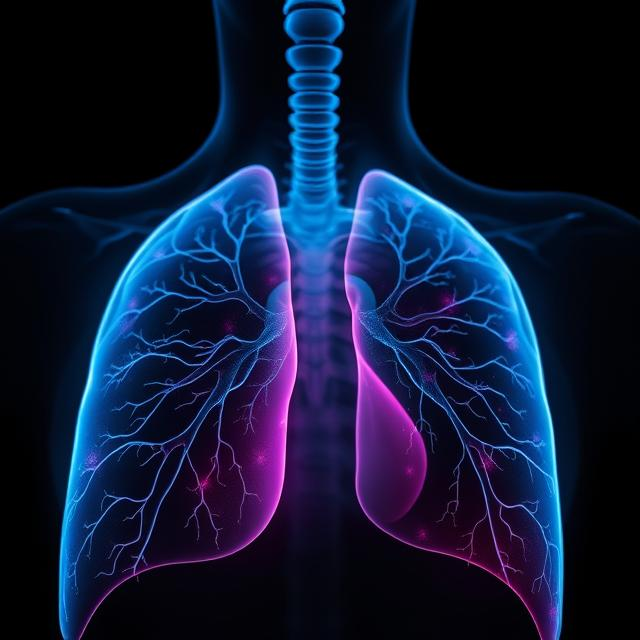
Lung cancer remains one of the most fatal malignancies worldwide, with high mortality rates due to late-stage detection. Early diagnosis significantly improves survival rates, but conventional diagnostic tools such as imaging and biopsies are often invasive, costly, and time-intensive. Analyzing volatile organic compounds (VOCs) in exhaled breath is emerging as a non-invasive, rapid, and cost-effective approach for lung cancer screening.
Exhaled breath contains biomarkers that reflect metabolic changes associated with diseases. Research has identified at least 12 key VOCs linked to lung cancer, including aldehydes, ketones, and aromatic hydrocarbons. This white paper discusses the AACTS-3000, a breathalyzer that leverages Patented Ion Mobility Spectrometry (IMS) to detect these biomarkers with high sensitivity and specificity, offering a potential breakthrough in lung cancer diagnostics.
Methodology
The AACTS-3000 breathalyzer is based on Patented Ion Mobility Spectrometry (IMS), an established technology for detecting trace chemicals. The detection process involves:
1. Breath Collection: The patient exhales 10-20 consecutive breaths onto a nanocarbon-treated sample card.
2. Sample Processing: The sample card is inserted into a heated desorber module, where thermal vaporization occurs.
3. VOCs Detection: Ionized molecules are analyzed via IMS, and their spectra are matched against a pre-programmed VOC database.
4. Analysis Time: The detection process is completed in 20 seconds.
Data preprocessing techniques such as baseline correction, noise filtering, peak alignment, and normalization enhance accuracy. A pattern recognition algorithm further reduces false positives and negatives, improving diagnostic reliability.
Key Findings
1. Identified VOCs and Their Role in Lung Cancer Detection
Scientific studies have pinpointed 12 key VOCs associated with lung cancer, categorized as follows:
• Aldehydes
• Ketones
• Aromatic Hydrocarbons
2. Detection Performance
• High Sensitivity & Specificity: The AACTS-3000 demonstrated strong accuracy in identifying lung cancer-related VOCs.
• Low Detection Limits: VOCs can be detected at the nanogram level.
• Rapid Analysis: Each breath sample is analyzed in 20 seconds, with immediate on-screen results.
• Repeatability: The device exhibits less than 5% relative standard deviation (RSD), ensuring consistent performance.
3. Patented Ion Mobility Spectrometry (IMS) Principles
IMS operates by ionizing molecules and measuring their mobility under an electric field. The AACTS-3000 employs dual polarity mode, enhancing detection accuracy. A chemical ionization process using ammonia reagent increases selectivity for lung cancer-associated VOCs.
Experimental Validation
1. Calibration and Detection Sensitivity
To ensure accuracy, pure chemical standards were tested using the AACTS-3000:
• VOC standards were obtained at 99% purity.
• Solutions were prepared in high-performance liquid chromatography (HPLC) grade methanol.
• Calibration curves were established to confirm detection linearity at low concentration levels.
• The system demonstrated high specificity in both positive and negative ion modes.
2. Field Testing and Clinical Trials
For real-world validation, the AACTS-3000 will undergo clinical trials in hospital settings:
• Breath samples from diagnosed lung cancer patients will be compared with healthy controls.
• Large-scale trials will be conducted to assess performance in diverse environmental conditions.
• The device’s built-in alarm threshold system will be fine-tuned based on field data.
Advantages and Future Applications
The AACTS-3000 breathalyzer offers several advantages over traditional lung cancer detection methods:
• Non-Invasive Screening: Eliminates the need for blood tests or biopsies.
• Rapid & Cost-Effective: Provides real-time results within 20 seconds, reducing diagnostic delays.
• Portable & Scalable: Suitable for hospitals, clinics, and mobile screening units.
Potential for Broader Applications
While designed for lung cancer detection, the IMS-based breathalyzer technology can be adapted for diagnosing other diseases. The system has already demonstrated efficacy in tuberculosis and COVID-19 detection. Future research will focus on expanding the VOC biomarker database, improving classification algorithms, and exploring multi-disease diagnostic capabilities.
Regulatory and Market Potential
The adoption of breath-based diagnostic tools is expected to revolutionize early cancer detection. Regulatory approvals will play a crucial role in the widespread implementation of the AACTS-3000. Collaborations with health organizations, research institutions, and regulatory bodies will accelerate approval processes and facilitate global deployment.
Additionally, the device’s compact design and affordability make it suitable for deployment in developing nations where access to traditional cancer diagnostics is limited. Establishing partnerships with global health initiatives and hospitals will ensure equitable access to this innovative technology.
Conclusion
The AACTS-3000 breathalyzer represents a significant step forward in early lung cancer detection, leveraging IMS technology to deliver fast, accurate, and non-invasive diagnostics. With ongoing clinical validation trials, this device could revolutionize cancer screening and public health strategies worldwide.
By integrating breath-based VOC analysis into routine diagnostics, the AACTS-3000 has the potential to improve survival rates, enhance patient outcomes, and reduce healthcare costs. Future advancements will refine the technology further, positioning it as a standard tool in cancer diagnostics and beyond.
Investments in research, regulatory approvals, and market expansion will be critical to ensuring the AACTS-3000’s success as a widely adopted diagnostic solution. As breath-based diagnostics continue to evolve, their impact on early disease detection and global healthcare improvements is expected to be profound.




Leave a Reply