
Introduction
Sampling Plays a crucial role in analytical chemistry, security screening, and industrial applications. Whether it involves detecting trace chemicals in cargo containers or analysing environmental samples, effective sampling techniques are essential for accuracy and reliability.
The Importance of Trace Chemical Detection.
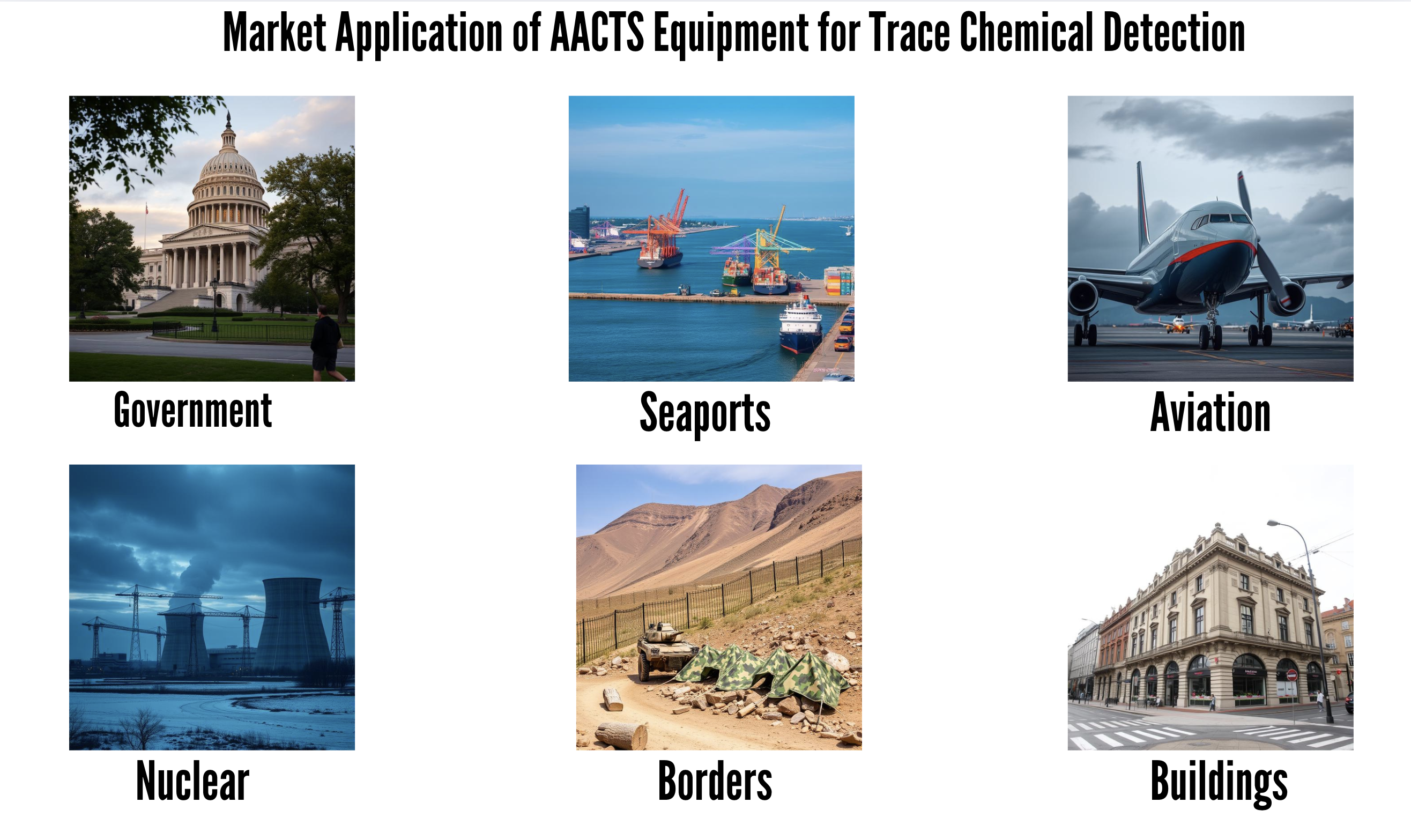
Trace Chemical Detection is critical in areas such as security, border control and environmental monitoring. Many controlled substances, explosives, and hazardous chemicals exist only in trace or ultra trace amounts, making detection challenging. Advanced analytical techniques allow for the identification of substances at levels as low as parts per million (ppm), parts per billion (ppb), and even parts per trillion (ppt).
Different Types of Sampling
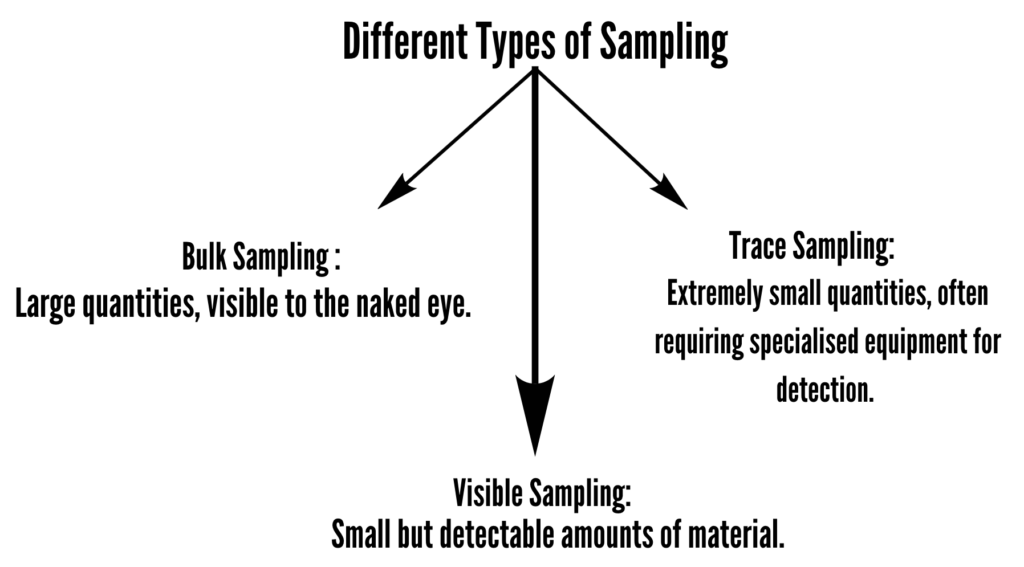
Sampling methods are categorised based on the amount of material being analysed:
Sampling Methodology
A proper sampling strategy is essential to ensure that the collected sample accurately represents the target material. The steps in a typical sampling workflow include:
- Organising the working area.
- Deploying the necessary equipment.
- Verifying equipment performance.
- Collecting the sample.
- Analysing the sample.
- Generating results.
- Making informed decisions based on findings.
Types of Sampling Equipment
- Sample Acquisition Equipment
Several tools are used for efficient sample collection, including:
- High Volume Sampler (HVS): Used for large enclosures like cargo containers.
- Hand Held Sampler (HHS): A portable tool for sampling individuals, vehicles and packages.
- Sample Cards: Wire mesh coated with a molecularly sticky compound to trap vapour and particles.
- Solid Phase Micro Extraction (SPME): Uses coated fibres to collect volatile organic compounds.
- Equipment Maintenance
Proper maintenance is necessary to avoid contamination and ensure reliable results. Cleaning protocols, blank analyses and regular validation are crucial steps in keeping the equipment operational.
Sampling Methods
There are Two primary sampling techniques:
- Aspiration Sampling (Vapour and Particulate Collection)
Aspiration sampling involves drawing air through a filter to collect chemical traces. The sample is then analysed for contaminants. Common air contaminants include Particulates (e.g, aerosols, dust, fumes, smokes, mists), Vapours (e.g, chemical residues from explosives or drugs), Gases (e.g, atmospheric pollutants).
- Surface Swabbing
Swabbing collects particles from surfaces where contaminants may have settled. This method is particularly effective for detecting non-volatile materials such as explosives and drug residues.
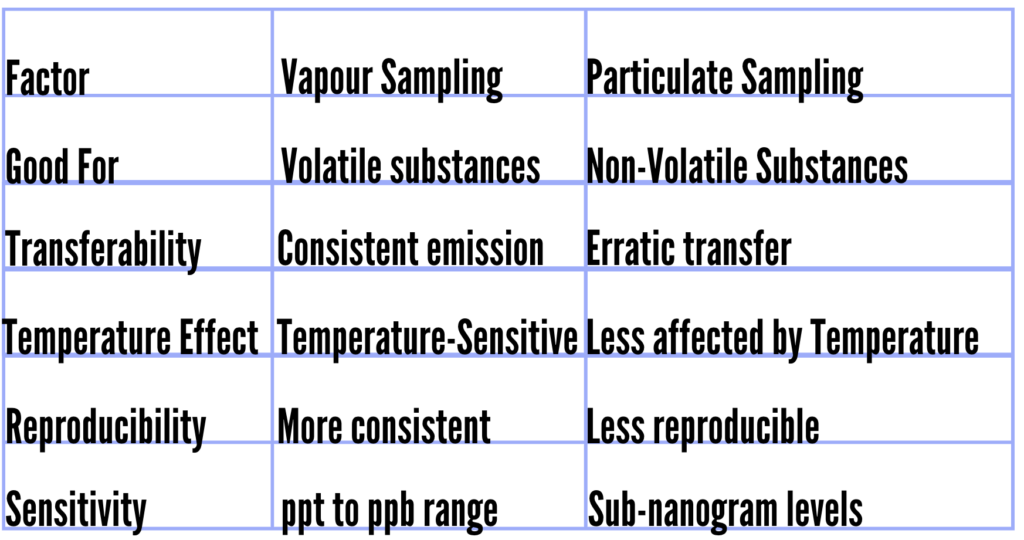
Vapour vs. Particulate Sampling
Real-World Applications of Sampling
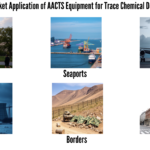
- Security Screening at Borders
Sampling air vents in cargo containers to detect contraband (e.g, explosives, narcotics). Using handheld samplers to inspect suspicious packages and vehicles.
- Airport and Maritime Cargo Screening
Sampling mail, parcels, and luggage for traces of hazardous substances. High-volume air sampling in ULD (Unit Load Devices) for air cargo security.
- Detection of Explosives and Drugs
Tracing PETN (a plastic explosive) in shipping containers. Identifying cocaine residues in air samples using suction-based detection.
- Personal Screening for Security Checks
Using wearable samplers to collect air particles around individuals. Swabbing clothing and belongings to detect contraband.
The Overall Process of Sampling: A Systematic Approach
Sampling is a crucial procedure in various industries, particularly in security, forensic analysis, and environmental monitoring. It involves the systematic collection, processing, and interpretation of samples to detect trace substances such as explosives, narcotics, or hazardous chemicals. The process ensures accuracy, reliability, and efficiency in detecting potential threats. The overall sampling process consists of seven key steps:
- Working Environment and Logistics
The first step in the sampling process is setting up an organized and efficient working environment. Proper logistics planning ensures that sampling is conducted in a controlled manner, minimizing contamination risks and optimizing workflow. This involves selecting the appropriate location, ensuring the availability of required personnel, and defining protocols for smooth operations.
- Primary and Optional Equipment Deployment
Deploying the right equipment is essential for effective sampling. Primary equipment includes high-volume air samplers, handheld swabbing devices, and chemical analyzers. Optional equipment, such as additional sensors and secondary verification tools, may also be used depending on the sampling context. Ensuring the proper placement and functioning of equipment enhances the accuracy of results.
- Verification of Equipment Cleanliness and Performance
Before collecting samples, all equipment must be checked for cleanliness and operational efficiency. Contaminated or faulty equipment can lead to false positives or negatives, compromising the reliability of the analysis. Routine maintenance, calibration, and blank sampling tests help verify that the equipment is functioning correctly and free from residual contaminants.
- Sample Acquisition
This is the most critical step in the sampling process. Samples can be collected using various techniques, including vapor aspiration, surface swabbing, and particulate trapping. The choice of method depends on the nature of the target substance and the surface or environment being sampled. Proper sample acquisition techniques ensure that even trace amounts of substances are effectively collected for further analysis.
- Data Processing
Once the sample is collected, it undergoes data processing, where analytical techniques are applied to identify the presence of target substances. This step involves chemical analysis, spectrometry, and pattern recognition to extract meaningful data from the sample. The processing stage is essential for converting raw sample information into actionable results.
- Result Generation and Acknowledgment
After processing the data, results are generated and documented. The system classifies the findings into two categories:
• No Detection: If no traces of the target substance are found, the object or environment is declared clean.
• Result Found: If traces of substances are detected, further investigation is required through secondary screening, additional questioning, or interviews.
- Decision and Action Making
Based on the findings, authorities or analysts make final decisions. If no threat is detected, normal operations continue. However, if suspicious substances are found, additional measures such as detailed inspection, detainment, or further forensic testing may be implemented. Effective decision-making ensures that security and safety are maintained while minimizing disruptions.
The sampling process is a meticulously structured procedure designed to enhance accuracy and efficiency in detecting trace substances. Each step, from environmental setup to final decision-making, plays a crucial role in ensuring reliable results. By following a systematic approach, organizations can strengthen their security measures, improve quality control, and enhance forensic investigations.
Sampling Logistics and Deployment
To optimise efficiency, the document outlines the logistics of sampling operations. Key factors include Organising screening zones for sample collection and analysis, Choosing between mobile and stationary deployment, depending on the threat level and location, Integrating multiple technologies, including metal detectors, X-ray scanners, and chemical sensors.
Decision-Making in Sampling
The results from sampling determine subsequent actions. The decision tree for security screening follows these steps:
- If no contamination is detected, the object is cleared.
- If trace substances are found, secondary screening occurs.
- If significant evidence of contraband is detected, authorities take action (e.g, denying entry, further inspections).
Conclusion
The science and art of sampling require a combination of advanced technology, strategic planning and operational efficiency. Whether for security screening, industrial quality control or environmental monitoring, accurate sampling ensures the detection of trace chemicals and improves safety measures worldwide.
By using innovative sampling techniques and integrating multiple detection systems, organisations can enhance their ability to identify and migrate risks associated with hazardous materials and illegal contraband.


Leave a Reply